



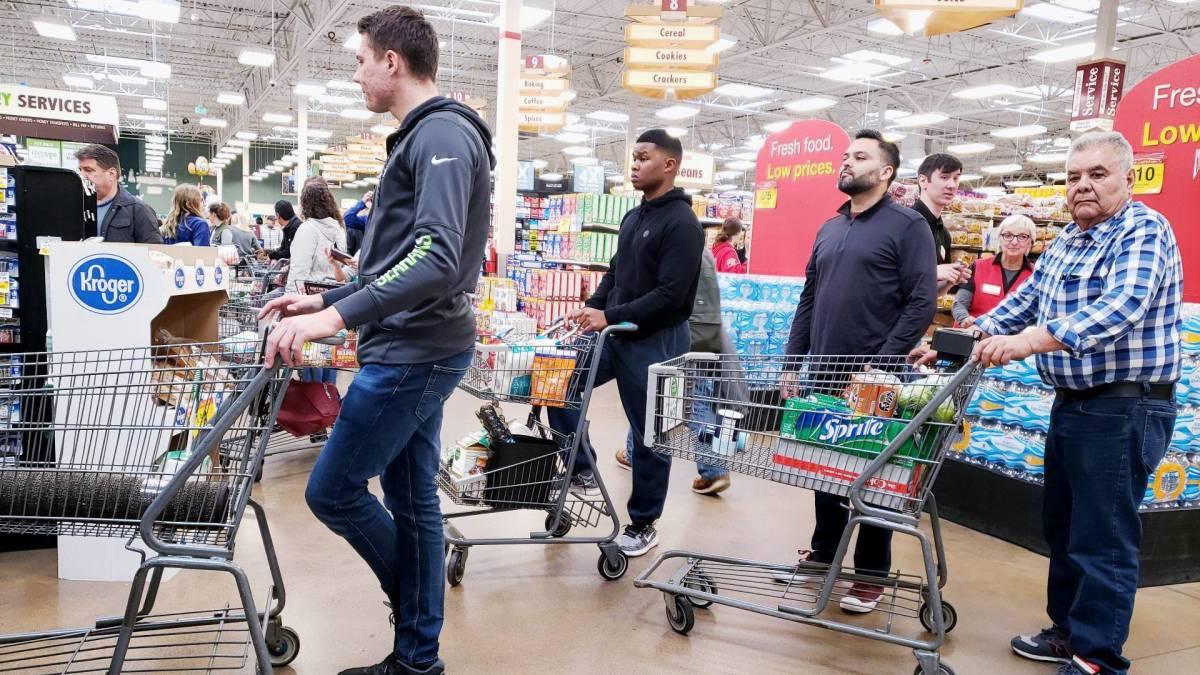

Grocery giants Kroger and Albertsons have struggled to compete with other supermarkets in recent years.
Major supermarket chains have been closing several stores and warehouses in underperforming areas. This is largely due to changing demand and consumer habits, forcing financially strapped big-box stores to reduce their physical footprints.
Both Albertsons and Kroger have confirmed store closures in the coming months, TheStreet previouslyreported.
Unfortunately for the two supermarkets, those closures might not be enough to stave off yet more problematic costs from a very different source.
A costly failed Kroger and Albertsons merger
Kroger and Albertsons tried to merge in 2022, but the deal fell apart on antitrust concerns in 2024, the Associated Press reported.
The merger would have created one of the largest grocery chains in the U.S., which the Federal Trade Commission (FTC) said would have eliminated competition and increased prices for millions of Americans.
Both companies own several well-known brands. Kroger, for example, operates Fry’s, Kroger, Harris Teeter, Fred Meyer, and others. Albertsons’ banner includes Albertsons, Safeway, Pavilions, and Vons.
The merger would have resulted in a combined store count of more than 5,000, including 700,000 employees.
Now, several states and the District of Columbia are suing Albertsons and Kroger for the costs associated with the failed merger.
More potential expenses for Kroger and Albertsons
A coalition of states and Washington, D.C., filed a federal lawsuit against Kroger and Albertsons. The lawsuit seeks $10.35 million for expenses incurred for investigating the proposed merger.
While the states were able to save costs by working with the FTC, the lawsuit shows just how expensive larger mergers are for taxpayers.
“The amount of the requested award is reasonable and a fraction of the more than $1 billion in merger-related fees and costs Defendants incurred,” the lawsuit alleges.
States suing for compensation
- California is seeking $5.1 million.
- Oregon wants $2.3 million.
- Arizona asked for $972,000.
- Maryland wants $650,000 compensated.
- Illinois seeks $549,000.
- Washington,D.C., is asking for $524,000.
- Nevada wants $258,000.
- Wyoming wants $34,000.
- New Mexico is seeking only $3,000.
According to court documents, the eight states and D.C. in the lawsuit independently investigated the potential merger’s impact in their respective states. Some even hired economic experts to analyze the potential effect in local areas.
Collectively, they hired 60 attorneys in eight law firms. The states joined the FTC when it sued to block the merger of Albertsons and Kroger. While U.S. District Judge Adrienne Nelson ruled that the states are entitled to compensation for fees and costs, he did not set an amount, Reuters reported.
The lawsuit alleges that the states tried to discuss compensation with Kroger and Albertsons, but an agreement was not reached.
Changing shopper habits
The failed merger of Albertsons and Kroger has already cost the grocery chains. Kroger laid off 1,000 corporate employees after the failed merger to trim costs, according to the Los Angeles Times.
The supermarket giants spent a total of $1.5 billion on merger attempts, the lawsuit contends.
More retail news
- Ross is betting on shoppers’ love of discounts
- Low-priced Walmart rival steps up expansion plans
- Beyond Meat CEO blames Americans for company problems
If the judge agrees, it could cost them $10.3 million more.
That’s not great for the struggling grocery retailers. Consumer trends have changed as shoppers are weighing inflation costs and tighter budgets.
Fresh format grocers led in growth over value grocers and wholesale clubs in 2025, according to Placer.ai.
Meanwhile, online grocery sales are on the rise. Sales from online grocers surged 32% to a record $12.7 billion in December 2025, according to Brick Meets Click.
Related: 93-year-old sandwich chain has closed half of its restaurants