



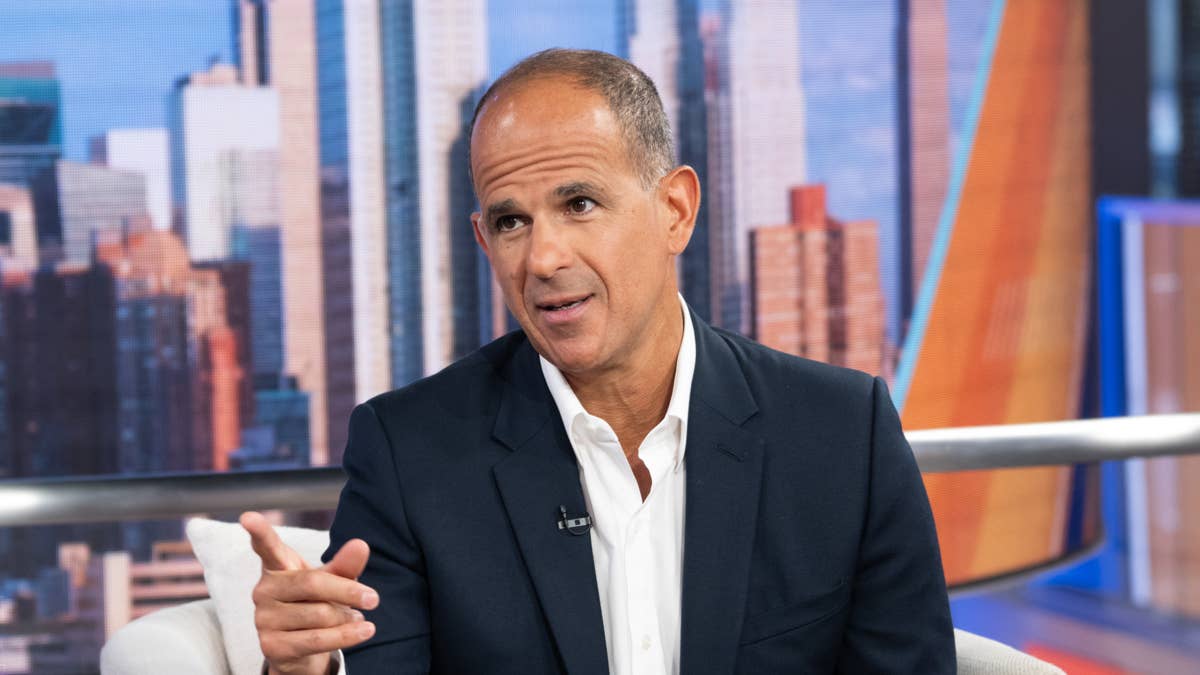

Marcus Lemonis has never been a quiet operator.
Since taking over as CEO of Bed Bath & Beyond on Jan. 1, he has been on a buying spree, snapping up struggling home brands and piecing them together into something far bigger than a housewares retailer.
The question investors are asking: Is this a visionary reinvention, or too many moving parts at once?
After years of shrinking revenue and painful cost cuts, Bed Bath & Beyond (BBY) can finally point to a number.
First-quarter 2026 revenue came in at roughly $248 million, up 7% year over year (or 9.4% when you strip out the discontinued Canada operations).
It’s the first time the business has grown sales in 19 quarters.
Bed Bath & Beyond: from home retailer to home-life ecosystem
To understand what Lemonis is building, you need to forget the old Bed Bath & Beyond. He isn’t trying to reopen big-box stores and stuff them full of bath towels.
The model he laid out on the earnings call is organized around three pillars: an omnichannel retail platform, a products and financial services arm, and a home services business.
The idea is simple, even if the execution is complex. The average homeowner stays in their house for about 11 to 12 years.
During that time, they buy furniture, renovate kitchens, take out a mortgage, get home insurance, and eventually sell.
Lemonis wants his company involved at every step of that journey.
“We want to be known going forward as a data and technology company that happens to cut its teeth in the home space,” Lemonis stated during the earnings call.
That’s a very different pitch than “buy a shower curtain.”
Lemonis’ dealmaking sprint is accelerating
Earlier this quarter, Bed Bath & Beyondclosed its deal to acquire Kirkland’s, picking up roughly 240 small-format retail locations.
- It also unveiled an agreement to acquire The Container Store, which brings 100 locations in prime real estate markets and a built-in home organization business with the Elfa and Closet Works brands.
- Beyond retail, Lemonis shared an in-principle deal to acquire F9 Brands, the parent of Lumber Liquidators and Cabinets To Go, adding more than $500 million in annual revenue.
- He also revealed plans to acquire a nationwide network of installation and renovation professionals, as well as a real estate brokerage, a mortgage company, and a home title business.
On the financial services side, the company is partnering with Brown & Brown Insurance for home warranties and property coverage.
More retail:
- Lawsuit unveils big problem with Costco staple
- After bankruptcy and liquidation, a major retail name returns
- Publix adds new heavyweights to its prepared food lineup
Moreover, Bed Bath & Beyond is working to launch what it calls America’s first homeowner credit union.
Rounding it all out will be a new loyalty partnership with Bilt, the rewards platform popular with renters, which Lemonis described as the connective tissue that ties every brand together.
He said the long-term goal is for renters to earn enough points by shopping across his brands to eventually fund a down payment on their first home.
The math Lemonis is asking investors to trust
Bed Bath & Beyond’s financials are still a work in progress.
Adjusted EBITDA (earnings before interest, taxes, depreciation, and amortization) came in at a loss of $8 million for the quarter, but that’s a $5 million improvement compared to the same period a year ago. The net loss also improved by $24 million year over year.
Chief Financial Officer Adrianne Lee, who is departing after the quarter, noted that operating costs hit their lowest point in more than 12 years.
Related: 153-year-old iconic shoe retailer closing most of its stores
Lemonis said he expects to strip out an additional $60 million in costs across the combined company over the next nine months. He is targeting an EBITDA margin of 6% to 7%, and he was blunt about how he plans to get there.
“We are going to experience a significant reduction in headcount,” he said, pointing to artificial intelligence as a driver of that reduction.
Lemonis added that the company would redeploy some of those savings into customer-facing roles in stores and at-home service jobs.
For Q2, he warned investors to expect about $13 million in one-time costs tied to integration work, distribution center closures, exits from leases, and the elimination of redundant systems.
Bed Bath & Beyond‘s risk hiding in plain sight
Lemonis is essentially rebuilding the Bed Bath & Beyond “plane” while flying it.
Multiple deals are closing in rapid succession. The Container Store transaction is expected to close around July 1. The Lumber Liquidators and Cabinets To Go deal is still pending. A shareholder vote on The Container Store merger is set for May 14.
That’s a lot of execution risk compressed into a very short window.
Still, the Q1 revenue growth, the first in nearly five years, gives the strategy at least a foothold of credibility.
And with combined revenues from all announced brands potentially pushing past $2 billion, the scale argument starts to make more sense.
Whether the ecosystem vision holds together is the bet Lemonis is asking investors to make.
Related: Major retail name returns after bankruptcy, liquidation