



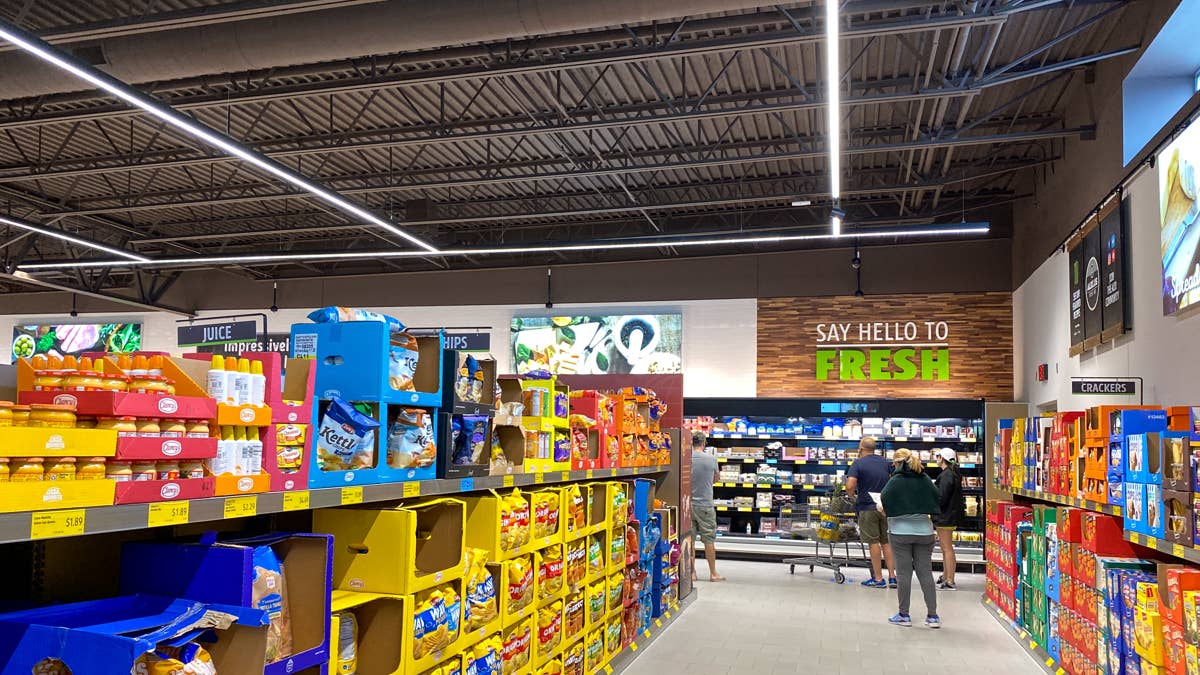

Aldi is making a major change to its core product offerings as customers shift their shopping preferences toward healthier food options, following several competitors that have made similar moves. The change comes as the grocery chain faces rising store traffic.
As Aldi expands its store footprint, with plans to open 180 new U.S. stores this year, it has seen rising customer traffic. In the fourth quarter of 2025, average customer visits per location increased by 7.4% year over year, according to a recent report from Placer.ai.
The report also shared that Aldi had a higher share of visits in the 15-30 minute and 30-45 minute ranges than the grocery category overall.
Amid this growth, Aldi is moving forward with several changes in its stores to appeal to more shoppers.
For example, the grocery chain has quietly been testing a new store format in the U.S. that includes different store sizes as well as new signage and packaging, according to a recent Forbes report.
The changes also include additional floor space for fresh produce, organic options, and “grab-and-go items,” Allrecipes reported.
Aldi resets its product lineup
In addition to switching up its store format, Aldi recently confirmed its commitment to remove 44 Ingredients from its private-label food, vitamin, and supplement products by the end of 2027, according to a recent press release.
Aldi revealed that the ingredients being removed from these products include “select artificial preservatives, colors, flavors, and sweeteners.” Specifically, ingredients such as BHA, BHT, lye, talc, and phthalates are getting the boot.
As these changes roll out in phases throughout this year and 2027, shoppers will see updated ingredient information directly on product packaging.
The grocery chain said in the press release that it is “working closely with supplier partners” to ensure the ingredient changes don’t negatively affect the taste and quality of these products.
Aldi also said it will “remain dedicated” to offering customers these reformulated products at the “lowest possible prices.”
In the press release, Aldi Chief Commercial Officer Scott Patton said feedback from customers led the company to make this change.
Related: Kroger drops new offer for customers as grocery prices climb
“At the heart of our private label products is a commitment to listening to our customers and continually improving the products they bring into their homes,” said Patton. “Based directly on customer feedback, we are proud to take meaningful steps to make it even easier for families to fill their carts with confidence by delivering simpler ingredients while continuing to provide the quality and value they expect from Aldi.”
Aldi’s latest move follows its removal of 13 ingredients, including synthetic colors, from its exclusive products in 2015.
The change from Aldi follows in the footsteps of several of its competitors in the grocery space. Last year, Walmart’s Sam’s Club cut more than 40 unwanted ingredients and synthetic colors from its Member’s Mark food products.
Target also recently vowed to ban by May all cereals in its stores that contain certified synthetic colors. Save-A-Lot also plans to eliminate seven artificial dyes from all of its private-label brands by the end of 2027.
Aldi’s latest move reflects shifting consumer habits
Grocery retailers are increasingly removing unwanted ingredients from their products as consumers grow more health-conscious, especially when it comes to food.
Concerns over certain food ingredients have gained traction in recent years, particularly on social media. Seed oils such as canola, sunflower, and palm have been criticized by some consumers for being heavily processed, with claims that they may contribute to inflammation, Cleveland Clinic explained.
At the same time, synthetic dyes including Blue 1, Red 40, and Yellow 6 — widely used in packaged foods and approved by the U.S. Food and Drug Administration — have come under scrutiny over potential health risks, including hyperactivity in children and cancer, HealthLine noted.
More Grocery News:
- Publix angers customers by removing convenient payment option
- Kroger adds bold offer for customers as gas prices rise
- BJ’s Wholesale makes bold move to lure more shoppers
U.S. Secretary of Health and Human Services Robert F. Kennedy Jr. has even admonished the ingredients in highly processed foods, claiming they contribute to obesity.
“Seventy percent of Americans are either obese or overweight, and it’s not because they got indolent or because we became lazy or because we suddenly developed giant appetites,” said Kennedy in an interview with CBS News in February. “It’s because we’re being given food that is low in nutrition and high in calories, and it’s destroying our health.”
Last year, he even called for a ban on artificial dyes from all U.S. food products. “These poisonous compounds offer no nutritional benefit and pose real, measurable dangers to our children’s health and development,” he stated in a press release.
This change in attitude towards processed food ingredients is even impacting how consumers shop in stores. A recent survey from the International Food Information Council (IFC) found that more Americans are shopping for food products with cleaner and simpler ingredients.
Related: Meet the billionaire family that owns Trader Joe’s and Aldi
How Americans are steering clear of certain food ingredients:
- About 58% of Americans said healthplays a key role in their food and beverage purchases.
- Roughly half (51%) check the Nutrition Facts label before making a purchase decision.
- Label claims also matter: 41% often seek out products that are labeled as “natural,” while 38% look for “no hormones or steroids” labels, and 30% prioritize “organic” and “non-GMO” options.
- Most Americans (80%) weigh how processed a product is before buying it.
- Nearly six in 10 said food and nutrition content on social media has influenced them to make healthier choices over the past year.
Source: IFC
In a press release, IFC CEO Wendy Reinhardt Kapsak said the organization’s latest research shows Americans are “motivated but not fully confident” as they reassess their health in 2026.
Many are experimenting with diets and tools such as GLP-1 medications. This has reshaped their definition of healthy eating as they navigate an “increasingly crowded” information landscape.
Related: Publix angers customers by removing convenient payment option