




Just because a market needs a store does not mean retailers can make money operating in that area.
In some cases, there’s simply not a large enough population to justify opening or operating a store. In other cases, the economics of the population simply don’t work.
That’s why some markets have what’s known as food deserts, areas where people have limited access to affordable, healthy food, especially fresh fruits, vegetables, and whole foods. These areas often lack full-service grocery stores.
In recent years, pharmacy deserts have become increasingly common. Those are areas where companies like CVS, Walgreens, the now-closed Rite-Aid, or local operators have pulled out.
There was a broad disruption of the pharmacy sector in 2025.
“There are roughly 2,000 fewer pharmacy locations, to start: Around 1,250 Rite Aid’s locations closed after its Chapter 11; Walgreens shuttered around 500 locations, as part of its plans to close 1,200 in three years; and CVS closed 270 spots in 2025, on top of another 900 doors in recent years,” according to Modern Retail.
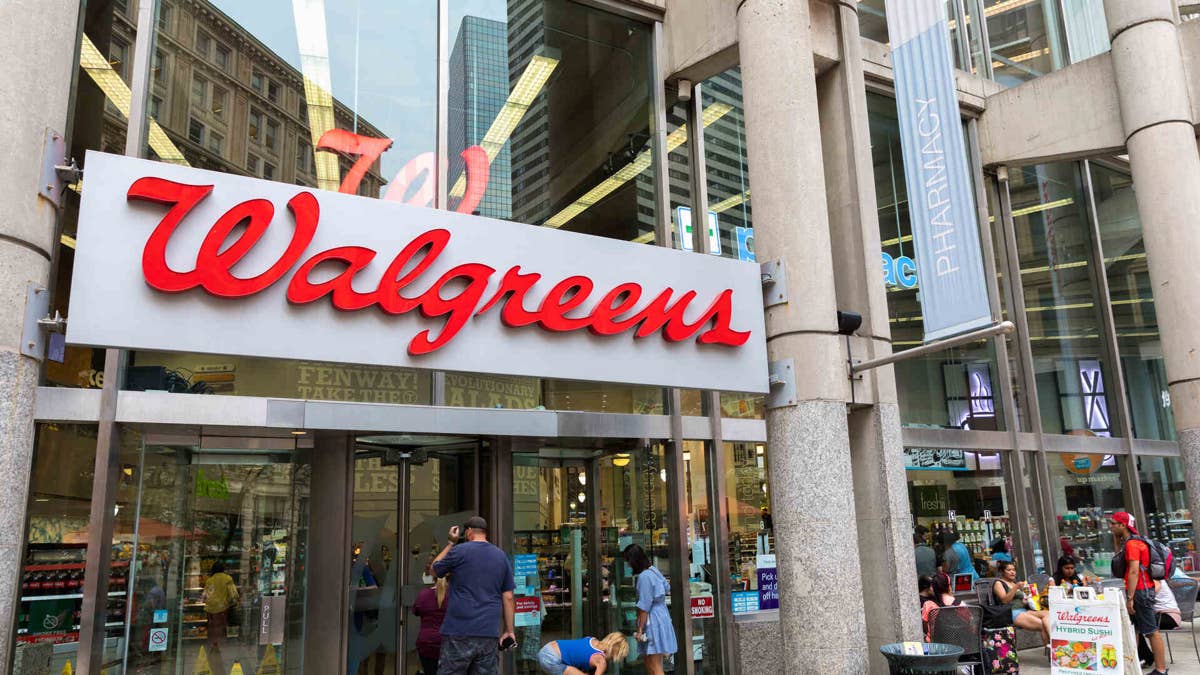
Now, Walgreens’ plan to close over 1,200 stores in three years has been met with protests as some of its closures will leave areas as pharmacy deserts.
Walgreens has been closing stores
When Walgreens shared its plans to increase its rate of store closure, CFO Manmohan Mahajan painted the decision of which stores to close as purely financial.
“Several factors go into our determination of where we need to take the action. I’d say maybe I focus on the financial side. It’s really driven. It comes down to the cash flow analysis: is cash flow positive to keep it open, or cash flow positive to close? And so decision to close typically would result in accretion both on the cash as well as on the adjusted EPS side,” he said during the chain’s third-quarter 2024 earnings call.
At the time, CEO Tim Wentworth painted a bleak picture of the company’s market.
“We are at a point where the current pharmacy model is not sustainable, and the challenges in our operating environment require us to approach the market differently,” he added.
After Walgreens Q3 2024 earnings report, David Wagner, portfolio manager and equity analyst at Aptus Capital Advisors, shared his thoughts on the chain’s numbers.
“The results this morning were just absolutely terrible. I mean, it’s kind of been the theme over the last three to eight earnings reports to be brutally honest,” he told Reuters.
Walgreens closures create pharmacy deserts
Walgreens, CVS, and other pharmacy chains have no obligation to operate unprofitable stores. But, when they leave a market that creates real problems, based on research from the University of South Carolina (USC).
USC professor Dima Mazen Qato said studies have shown Americans living in pharmacy deserts are more likely to have worse cardiovascular health troubles and less likely to take the medications they need.
“Pharmacies provide a lot of essential services to the communities they serve,” Qato said. “When they’re not serving them, those communities suffer.”
Multiple datasets, including federal shortage-area designations and peer-reviewed research, point to a consistent trend of declining pharmacy access in low-income and rural communities.
Pharmacy deserts are a growing problem, according to a 2026 study published in JAMA Network Open by researchers at The Ohio State University Comprehensive Cancer Center.
“Nearly half of the counties in the United States have at least one ‘pharmacy desert’ where there is no retail pharmacy within 10 miles,” the study found.
According to U.S. Health Resources and Services Administration (HRSA) Health Workforce Shortage Area data, millions of Americans live in regions designated as medically underserved, where access to nearby pharmacies and primary care providers is limited.
Some of those communities are pushing back.
Walgreens faces protests over closures
“As another South Side Walgreens prepares to close, local leaders and residents rallied outside the business Monday to demand corporate officials either keep the store open or invest in other healthcare organizations in the community,” Block Club Chicago reported.
Walgreens defended the closure in a statement sent to the media.
“Despite a range of efforts, including previous operating adjustments, these ongoing safety challenges have made it increasingly difficult to maintain a secure environment for our team members and customers,” the statement read. “While this was not an easy decision, safety must remain our top priority.”
Alderman William Hall noted that Walmart has closed roughly 10 stores in the region.
“Walgreens should be charged with first-degree corporate abandonment,” Hall said. “It should be a crime the way they’re treating our elders [and] our families.”
Shutterstock
Chicago is not the only city protesting Walgreens
Walgreens closures have been met with protests in multiple cities, including Boston.
Rev. Miniard Culpepper of Pleasant Hill Missionary Baptist Church and Prophetic Resistance Boston led the fight against Walgreens after the chain shuttered locations in Mattapan, Hyde Park, and Lower Roxbury.
“We’re not finished fighting,” Culpepper told Boston news channel GBH. “When the one in Mattapan closed, those customers came to Warren Street. When they closed the Geneva Ave. location, those customers came too. Now there are lines all the way around the inside of the store, and it’s had a crippling effect on our community.”
Culpepper suggested that the shutdowns may be racially motivated.
“I can’t say specifically why they identify the Black and Brown community, but when you have these kinds of closures, there’s implicit bias, and many times there is institutional racism,” Culpepper said. “I can say that they could have done a better job, not just notifying folks, but to involve us in their realignment. We’re talking about corporate greed here, profit over people.”
Walgreens did not address those allegations directly.
“When faced with the difficult decision to close a location, several factors are taken into account,” Walgreens spokesperson Samantha Stansberry said in a statement to GBH, “including our existing footprint of stores, dynamics of the local market, and changes in the buying habits of our patients and customers, among other reasons.”
Related: Lender forces cosmetics brand into Chapter 7 liquidation