



Earlier this year, Target experimented with new product categories, generous deals, and store changes to drive traffic, and now its latest bet is happening behind the scenes.
One of its recent efforts to regain customers’ interest includes 72 new “lower-potency hemp edible licenses,” Target obtained from the Minnesota Office of Cannabis Management. This move allows the retailer to expand its pilot program to all 72 stores in the state, making Target the largest license holder in Minnesota.
Why the sudden investment in the hemp space while shifting laws threaten the industry’s future?
It’s simple. Target is using this “controversial” category to regain foot traffic following a difficult 2025. Between boycotts over its Pride collection and the rollback of its DEI (diversity, equity, and inclusion) initiatives, Target saw full-year net sales drop 1.7% to $104.8 billion, with comparable sales slipping 2.6%, according to its SEC8-K filing.
This could be a smart move. I previously detailed that a NuggMD poll found 50.5% of cannabis consumers would shop at Target more often if these drinks were available. But while new products and special deals draw people in, they don’t fix the retailer’s underlying issues.
Maurie Backman, a retail reporter for TheStreet, recently cautioned that Target’s recovery plan may be overlooking a fundamental flaw: the state of the stores themselves. Backman argues that Target should prioritize renovating and optimizing the physical shopping environment over new merchandise and promotions.
Target’s new Houston “Receive Center” aims to do exactly that. By upgrading its supply chain, the retailer is betting that a better store experience actually begins with more efficient logistics behind the scenes.
Target opens new kind of supply-chain facility called Receive Center
Target has opened a special supply-chain facility in Houston, the retailer revealed on April 29. The high-tech warehouse, called a Receive Center, is worth $265 million and adds 185 new jobs to the city.
The new location is the first of its type for Target and is designed to serve six of its regional distribution centers in addition to a flow center. The Receive Center is a sort of massive waiting room for products.
While typically, items from around the world go to different warehouses before reaching a local store, this new center now acts as the first stop. Items are stored there directly from global suppliers and held at the Receive Center until a store actually needs them.
“Positioned between our Import Warehouses in Georgia and Washington, it complements those coastal facilities by adding regionally based capacity — helping us get products to the right place faster and at a lower cost thanks to shorter distances traveled,” Target stated in the press release.
What Target’s new supply-chain facility means to its customers
Good logistics allow Target to fix one of the key issues for many retailers and its customers: clutter. By keeping products in this center until the last minute, Target avoids overcrowding the back rooms of its stores and other distribution centers.
The new supply chain also benefits in the opposite direction by helping stores keep all the items in demand, instead of running out of products and frustrating shoppers with half-empty aisles.
“Really the intent of that is so that stores can stay in stock, that they can be ready for guests, whether that they’re shopping at their local store in Houston, or if they’re using online fulfillment methods, or drive-up, next-day delivery, anything like that,” Jordan Kirkland, the Houston Receive Center’s senior site director, told Supply Chain Dive.
What Target’s new supply-chain facility means for the retailer
Strategically located in Houston between other major hubs in Washington and Georgia, the facility enables the retailer to get products to stores in that region much faster, reducing shipping costs.
Target further highlights that the Receive Center is especially helpful for larger items such as furniture or seasonal goods that take up a lot of space. The retailer’s supply chain teams designed the 1.2 million-square-foot facility, which, according to Kirkland, equals roughly 3 million to 3.5 million cubic feet of product storage.
To ship products out, Target either loads full stacks straight onto trucks or uses a machine to sort individual items before sending them off.
“It’s actually two different independent line sorters, and so if one of them goes down or needs maintenance, we can continue to operate with the other ones,” Kirkland said. “There’s a lot of redundancy built in as well.”
Related: Target steps up its delivery game
Target’s new facility built with technology that saved half a million dollars
Target’s engineers used 3D virtual reality technology to “walk through” and test the entire warehouse before they even started construction. This helped them find and fix mistakes in the layout early, saving them more than $500,000 in building costs.
“After we did the immersive design review, we saw a significant reduction in the number of change requests after the building was open — saving us time, money, and energy. We estimated that we saved over half a million dollars in built materials procurement by doing this exercise, which is significant,” according to Lisa Sizemore, Target’s director for Supply Chain Design and Implementation, said in a company news article.
More Target:
- Target’s latest offering is so much more than a sale
- Target partners with viral influencer for an under $40 fashion line
- Target quietly launches cult-favorite brand to lure back customers
Target previously used this technology over the last couple of years to design and remodel properties. However, this was the first time it used it end to end in the design process to create an informative and influential 3D digital model of the facility before construction began. This enabled teams to test layouts, processes, and operational flow in a virtual environment to ensure proficiency.
“When design is brought into 3D, people can understand it without having an engineering background. There is an intuitiveness and richness to the experience. The visualization tells the story. The story is becoming richer. The chapters are more fulfilling, because we’re not leaving any cliffhangers,” said Tom G. (full last name not provided), principal supply chain engineer, Design Engineering, in the company news article.
Target’s new move might be the key to winning back customers
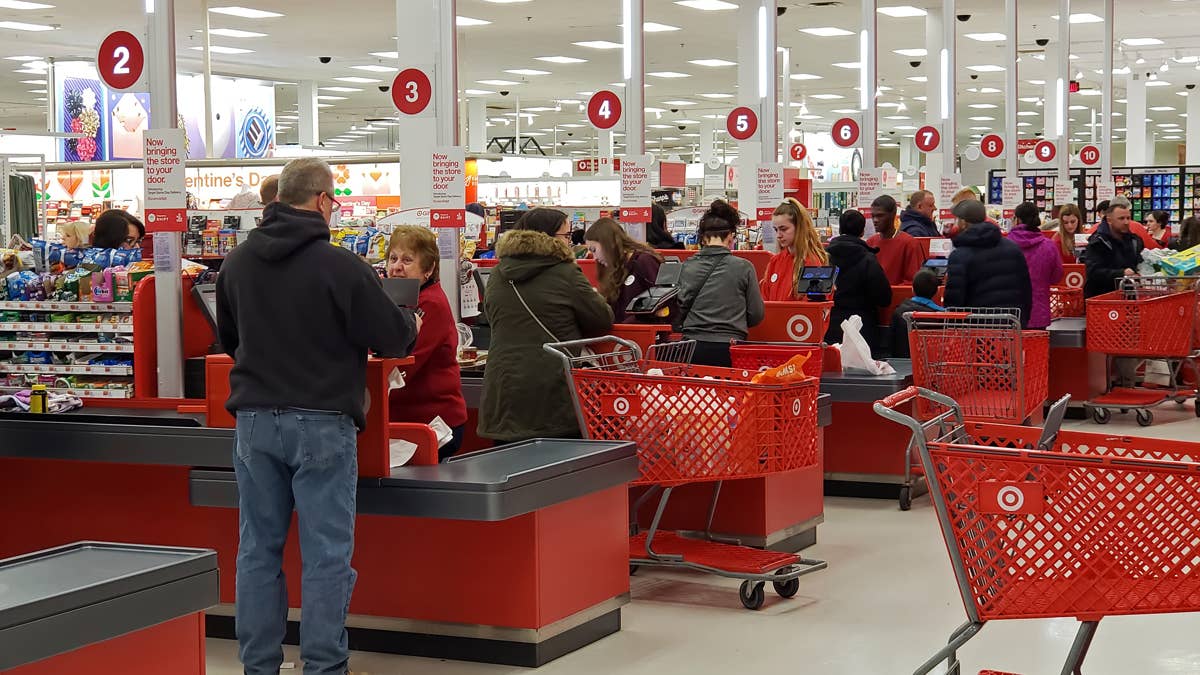
Earlier this year, Neil Saunders, managing director at GlobalData Retail, commented on the retailer’s $1 billion “turnaround plan” to fix its in-store shopping experiences, after customers complained about cluttered aisles and long checkout lines.
“Visiting Target stores is less pleasurable and less fun than it used to be,” Saunders said in an email to CX Dive. “There is far too much friction, and the experience is sometimes unpleasant. That’s an issue as it lowers the probability of people making visits, reduces visit frequency, and weakens conversion and basket size when people are in stores.”
Ultimately, while shoppers don’t really care about supply chain logistics or 3D digital models, they do care about finding what they need in a store that doesn’t feel like a construction zone.
If this facility can finally clear the aisles while keeping the shelves stocked, Target might just give its customers a reason to fall in love with the in-store experience all over again.
Related: 125-year-old iconic retailer closes more stores, shoppers react